Raghav Sachar on Music, Mastery, and Innovation
Can you give us a little background on the studio?
When I first moved to Mumbai in 2003, all I had was a laptop. I used rugs on the walls and whatever materials I could find to dampen the sound. That was my first step into working with monitors, small nearfields, and very basic gear. It was a humble home studio, but it’s where everything began. AutoTune is now my third studio. The main reason for moving to a larger, dedicated space was the need to separate work from home life. By then, I had my first son, and I didn’t want a constant flow of people coming into the house. With a home studio, there’s always guests and people around, and it can be difficult to stay focused. So, it became a conscious decision: to get up, get ready, and leave for work. That shift in mindset has been a powerful motivator ever since.
Tell us about this location: Andheri West – why did you choose to be here?
Choosing the right location was important. I wanted height, openness, and the right sense of space — not too big, not too small. I must have spent nearly a year just looking at different places to find that balance. This building stood out immediately because of its central location. It doesn’t get more central than this lane — Yash Raj Studios (film and music production) is right opposite us, Dharma Productions (films and music production) is next door, and T-Series (music label), Balaji (film and television production), and Eros (film and television production) are all here. The entire industry is within a 500-metre radius. That became the key reason for choosing this spot. From a spiritual perspective, we wanted a space to face northeast. Beyond that, there were many design considerations, since this space has a lot of glass. One thing I was very clear about was daylight — it was non-negotiable for me. Most studios don’t have natural light, but I’ve always needed a window. Without it, you completely lose track of time.
What Genelec model do you have?
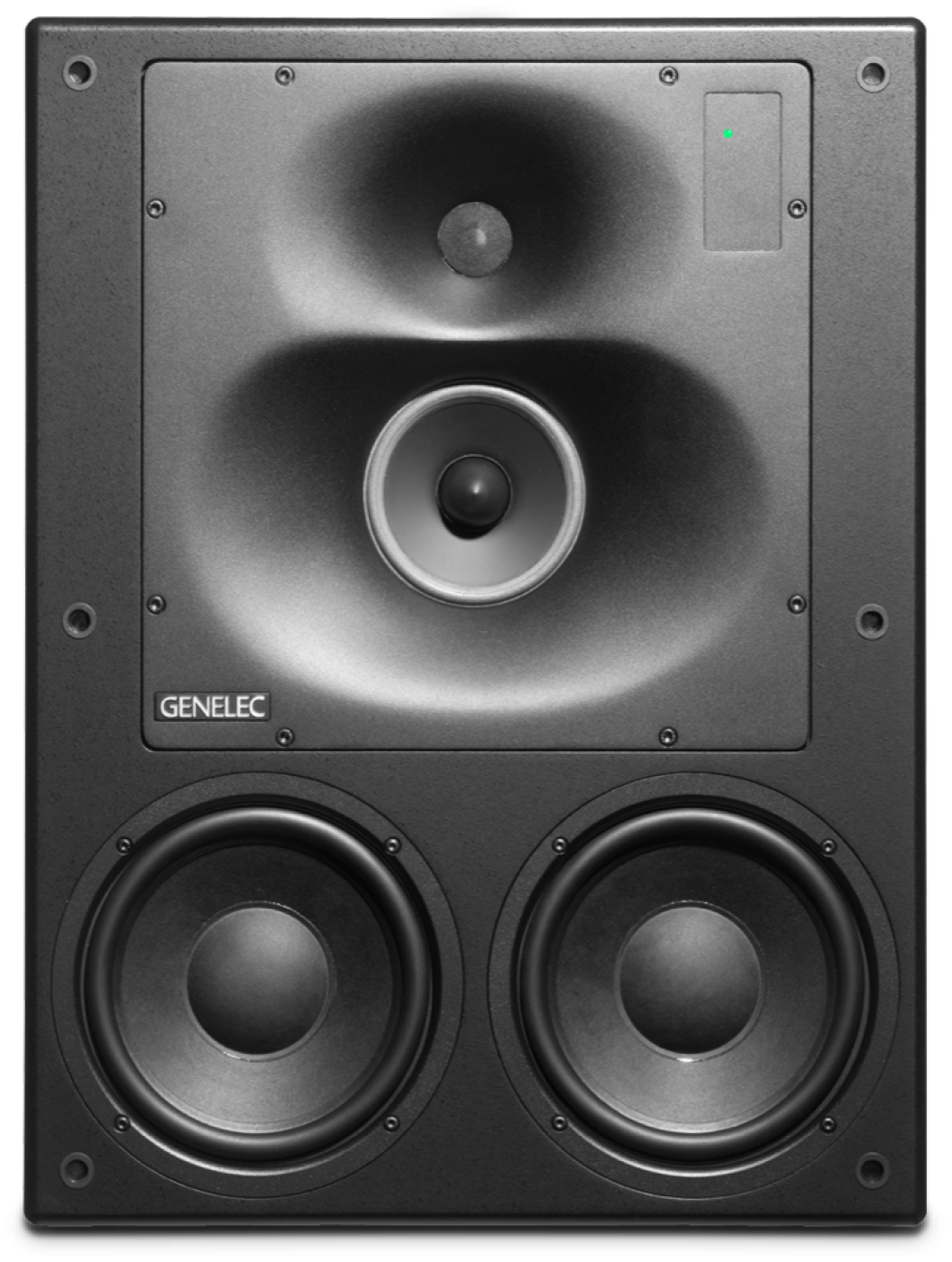
I have two 1238CFs These models were chosen based on the room. We needed the right SPL and coverage. They fill the room very nicely and give excellent results due to their transparency.
What made you decide on Genelec monitors?
Genelec came into my life in 2017, when this studio was completed.
To be honest, I wasn’t a huge fan at first. I remember thinking, “I’m not liking it—I’m not getting that warmth or punch.” But every music professional I spoke to kept saying the same thing: “Go with Genelec.” So I visited a few studios around Mumbai, listened in different rooms, and eventually decided to go with the 1238CFs.I had been used to hearing things a certain way, as my previous speakers were tuned quite differently. But after doing a few mixes on the Genelecs and listening to them in the car and other environments, I realised just how significant the change was. The translation is incredibly accurate—what you hear in the studio carries through outside. Earlier, my mixes would sound completely different depending on where I played them. Now, I know exactly what to expect. I can’t imagine working without Genelec anymore. Your ears adapt over time; in fact, for the first six months I thought I’d made a mistake, but the results proved otherwise. Looking ahead, I’m planning to expand further. We’ve already pre-wired the studio for Atmos, including power, speaker placements, and even provisions for hydraulic systems—it’s just a matter of time and how things develop.
How has your experience been with the GLM?
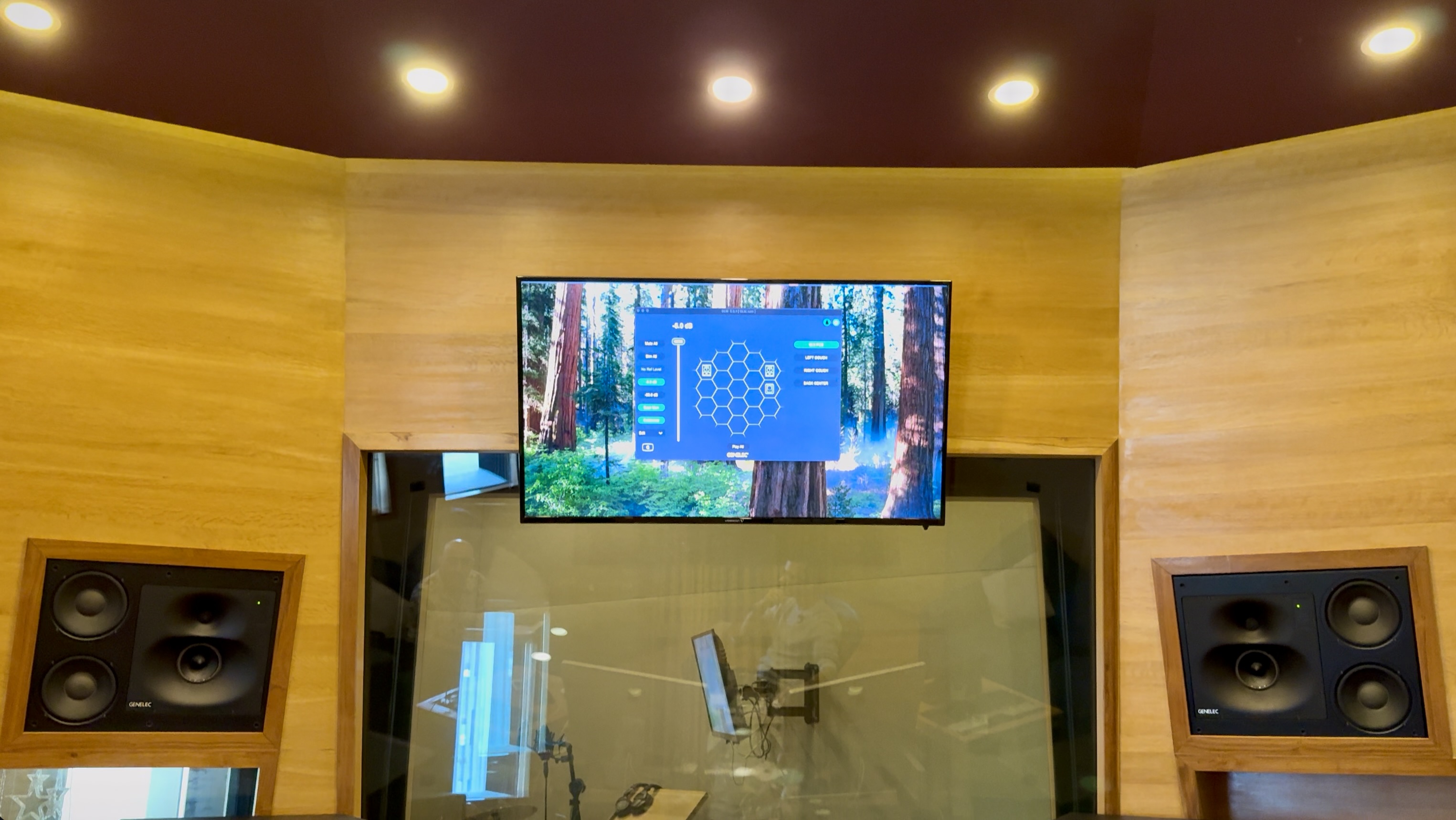
GLM is incredible. In the beginning, I tried to tweak things myself because I was used to a warmer sound, but that turned out to be a mistake. Once we carried out a proper GLM calibration, everything fell into place and became much more balanced. In India, producers often ask for more “thump” without fully understanding the frequencies involved, so at one point we even removed some bass trapping to exaggerate the low end to suit their expectations. With GLM, we were then able to create different listening zones—left couch, right couch, back wall—so I can shift the sweet spot depending on where the producer is sitting. It’s an incredibly useful tool.
How does your studio influence your work?
The room is your mirror—if the room isn’t right, the results won’t be either. In India, studio precision isn’t always consistent, so tools like GLM make a real difference. We made a few impulsive decisions along the way, like removing bass traps, but GLM allowed us to compensate and regain balance. We also incorporated glass surfaces to bring in natural daylight, so careful acoustic treatment was essential to manage reflections. Ultimately, a well-designed room fuels creativity. And in a city like Mumbai, having a space where you can work in true silence is a huge advantage—it allows me to focus completely.
How many instruments do you play? What kind of work has been done here?
I play forty-five instruments. We’ve done a huge amount of work here and had the pleasure of hosting many top artists—Sunidhi Chauhan, Sonu Nigam, Javed Ali, as well as actors like Ajay Devgn and Kajol. People genuinely enjoy recording in this space. I am also fortunate to work with great engineers, which naturally helps attract clients. We regularly host presentations too, and that’s where Genelec really stands out, the sound quality makes a noticeable difference. I’ve worked on international projects here as well. In fact, everything you see online, Instagram, and other platforms, is produced in this studio. I feel very grateful that people continue to come back.