Subwoofer Placement & Bass Management

Placing a subwoofer by a wall or in a corner maximises the subwoofer output, however, the flattest frequency response is usually achieved using a subwoofer location where room mode resonances are not significantly excited.
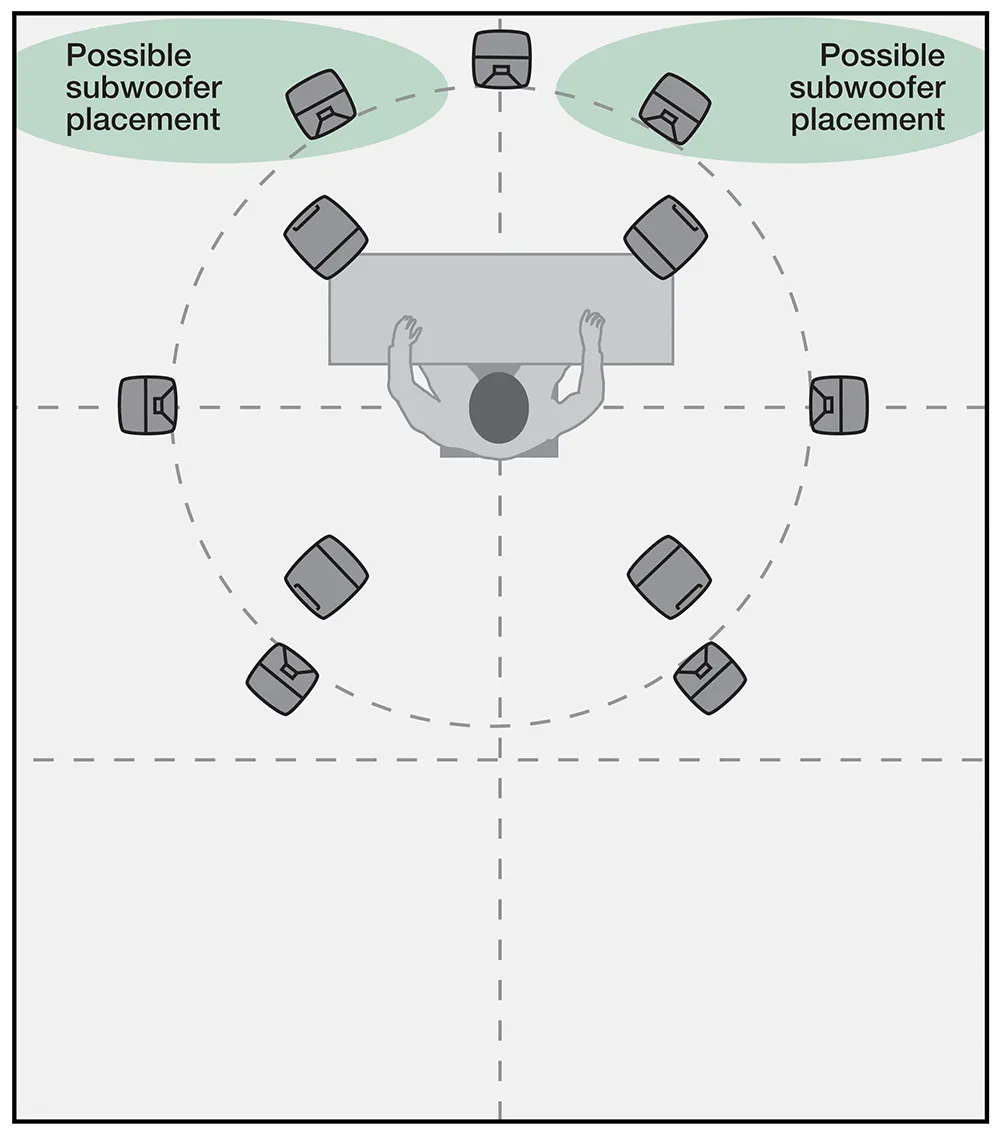
A single subwoofer is usually placed along the wall in front of the listening position, slightly off-centre from the room’s left-right symmetry axis. This achieves neutral output and good integration of low-frequency output with the loudspeakers on the same wall.
Two subwoofers may produce an even flatter frequency response. Output levels of subwoofers intended to work together are usually set the same and the combined output is aligned with the level of the main monitoring system.
Genelec active subwoofers cross over at 85 Hz by default. Lower frequencies are reproduced in the subwoofer, and higher frequencies are reproduced by the monitors.
Genelec Smart Active Monitoring (SAM) subwoofers allow the crossover frequency to be selected in the range of 50 to 120 Hz.The crossover frequency should be selected to allow monitors and subwoofers to output a significant amount of sound and combine well, supporting each other so that the subwoofers do not affect sound localisation.
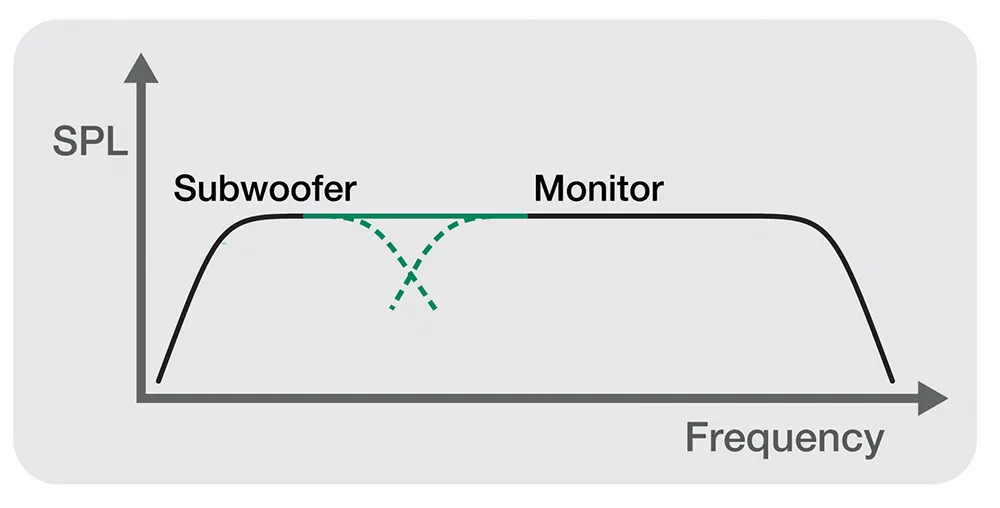
Subwoofer phase is adjusted in line with the loudspeakers at the crossover to maintain sound level at the crossover frequency range. More details are available in our subwoofer operating manuals.
The Low Frequency Effects (LFE) channel bandwidth is 120 Hz and LFE content is reproduced by the subwoofer.
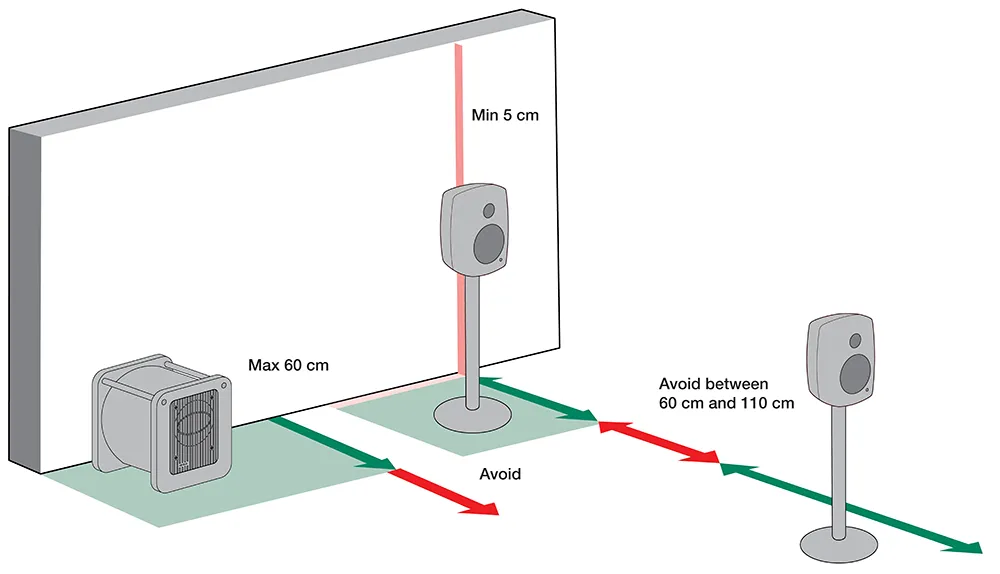
When bass management is used and a subwoofer reproduces the low frequencies of the main channels, this relaxes the recommended distances of the monitors from the walls behind them, allowing the monitors to be placed more freely relative to walls. The recommended distances are shown in the illustration.